


5 Steps of Inquiry-Based Learning: A Guide for Parents & Students
- Chettinad - Sarvalokaa Education

- Mar 9
- 3 min read

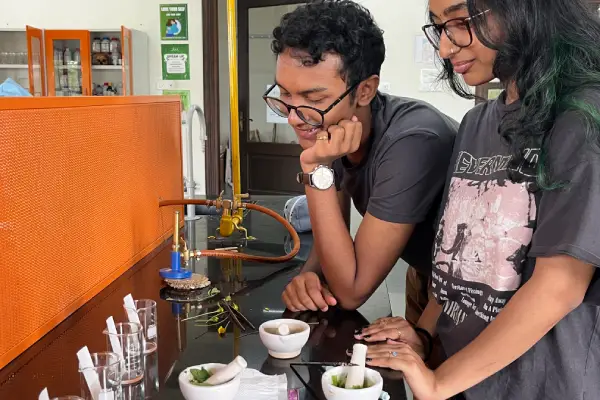
Inquiry based learning is more than just a teaching method—it’s a mindset that encourages curiosity, exploration, and critical thinking. For parents and students, understanding how this approach works can make learning more engaging and meaningful. In this guide, we’ll break down the five essential steps of the inquiry based learning model, share inquiry based learning examples, and provide actionable insights to help you apply it at home or in school.
Step 1: Ask Questions
At the heart of inquiry based learning is curiosity. Students begin by asking questions about a topic, problem, or concept. These questions drive the learning process and set the stage for exploration.
Encourage children to ask “why” and “how” questions.
Parents can model curiosity by asking open-ended questions during everyday activities.
Example: A child notices plants growing faster in sunlight. They ask, “Why do plants need sunlight to grow?”
Step 2: Investigate
Once questions are formed, students gather information through research, observation, or experimentation. This step builds critical thinking and problem-solving skills.
Use books, online resources, or hands-on experiments.
Parents can guide children to reliable sources and help them organise findings.
Example: Students design a simple experiment by placing one plant in sunlight and another in shade to observe differences.
Step 3: Create Solutions
In this stage, learners synthesise their findings and propose answers or solutions. It’s about connecting dots and making sense of the information.
Encourage children to brainstorm multiple solutions.
Parents can help by asking guiding questions like, “What evidence supports your idea?”
Example: Students conclude that sunlight provides energy for plants to grow, linking their observations to scientific concepts.
Step 4: Discuss and Reflect
Sharing ideas and reflecting on the process is crucial in the inquiry based learning model. Students learn to articulate their thoughts and consider different perspectives.
Parents can encourage group discussions or family conversations.
Reflection helps students understand what worked and what could be improved.
Example: A student explains their experiment to classmates, receives feedback, and refines their understanding.
Step 5: Apply Learning
The final step is applying knowledge to real-world contexts. This makes learning relevant and lasting.
Encourage children to connect lessons to daily life.
Parents can support by creating opportunities to use new skills at home.
Example: After learning about plant growth, students start a small garden, applying their knowledge practically.
Conclusion
For parents and students, embracing inquiry based learning means shifting from passive learning to active discovery. Institutions like Chettinad Sarvalokaa Education School exemplify the power of inquiry based learning by fostering an environment where students are encouraged to explore, innovate, and grow holistically. Their commitment to nurturing curiosity and critical thinking prepares students not just academically but also as thoughtful, responsible individuals ready to face real-world challenges.
FAQs
1. What are some simple inquiry based learning examples I can try at home?
Everyday activities can become inquiry opportunities. Cooking can lead to questions about measurements, gardening can spark curiosity about biology, and even a walk in the park can inspire questions about nature.
2. How does the inquiry based learning model differ from traditional teaching?
Traditional teaching often focuses on delivering information, while inquiry based learning emphasizes student-led exploration. The model encourages learners to ask questions, investigate, and apply knowledge rather than just memorize facts.
3. Is inquiry based learning suitable for all age groups?
Yes! Inquiry based learning can be adapted for any age. Younger children may explore through play and observation, while older students can engage in structured research and projects.



Comments